

 See My Latest Article on HelloNation
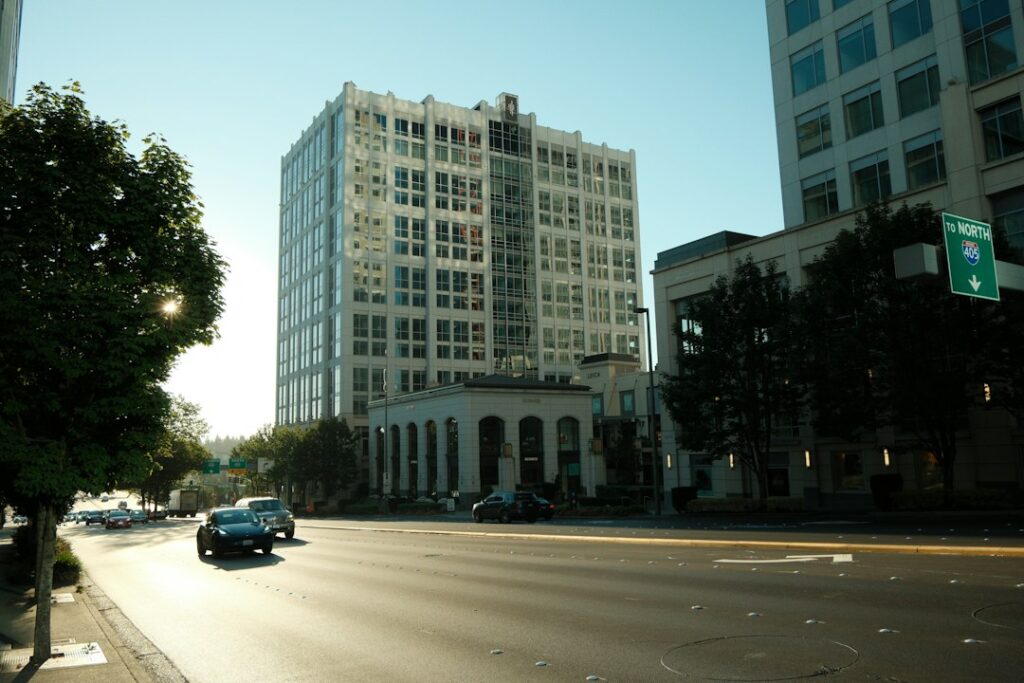
Why does location affect commercial property value?
Location influences how easily a property can attract customers, support employees, receive deliveries, and generate reliable income. Two buildings with similar size and construction can have very different values if one is easier to see, reach, use, or redevelop.
For commercial property, “location” means more than a street address. It includes traffic patterns, surrounding land uses, zoning, utilities, parking, visibility, nearby households, employment centers, and the future direction of the area.
In Ruston, these factors often interact with the city’s role as an education, service, retail, healthcare, and transportation center. A property’s value depends on how well its location matches the needs of its intended users.
How do traffic and visibility influence value?
Properties with strong visibility and convenient access often have greater value for customer-facing uses. A building that can be easily seen from a busy roadway may attract more spontaneous visits than a similar building hidden behind other structures or reached through a complicated driveway system.
Useful location questions include:
- How many vehicles pass the property during relevant business hours?
- Can drivers enter and leave safely?
- Is the site visible from more than one direction?
- Are signs easy to see without creating traffic or safety problems?
- Does the property have access to major roads without depending on a single difficult turn?
High traffic alone does not guarantee high value. A road may be busy but difficult to cross, congested during peak periods, or poorly suited to the type of business occupying the property. A quiet location may be more valuable for offices, professional services, light industrial uses, or destinations that rely on scheduled visits.
Why do surrounding properties matter?
Commercial properties rarely operate in isolation. Nearby housing, offices, schools, institutional facilities, industrial areas, and other commercial uses shape the customer base and employee pool.
A property near established residential areas may benefit from convenient access to everyday services. A site near employment or educational activity may have demand for food service, personal services, offices, convenience-oriented uses, or short-term needs connected to workers and students.
The surrounding mix also affects perception. Well-maintained neighboring properties, consistent landscaping, safe access, and compatible uses can support value. Vacant buildings, conflicting land uses, poor lighting, or recurring drainage problems may reduce demand even if the subject property itself is in good condition.
The most valuable setting is not always the most crowded one. Some commercial uses benefit from a concentrated customer base, while others need larger sites, lower rents, loading areas, or separation from heavy public traffic.
How does zoning affect commercial property value?
Zoning determines what may be built, operated, expanded, or changed on a property. It can directly affect value because buyers and lenders generally care about the income-producing uses that are legally available.
In Ruston, zoning and development review can involve permitted uses, conditional uses, building requirements, signage, parking, access, setbacks, subdivision rules, and future land-use designations. A property advertised as “commercial” may still have restrictions that prevent a particular operation.
A careful review should ask:
- Is the intended use allowed by right?
- Would a conditional-use approval be required?
- Can the building be expanded?
- Are parking and loading requirements practical for the site?
- Are there limits on signs, outdoor storage, lighting, or hours of operation?
- Could a future buyer use the property for a different purpose?
A flexible zoning designation may increase value because it gives an owner more options. However, flexibility should not be assumed from a listing description. The zoning map, applicable regulations, permits, and recorded restrictions provide a more reliable picture.
Does access to utilities affect value?
Water, sewer, electricity, stormwater systems, and communications infrastructure can strongly influence development costs. A site with nearby, adequate utilities may be easier and less expensive to develop than one requiring major extensions or upgrades.
This issue is especially relevant for commercial properties that need substantial water capacity, grease control, fire protection, wastewater service, or specialized electrical equipment. Utility capacity may also affect whether a building can be divided into multiple suites or adapted to a different use.
Stormwater management deserves close attention in the region’s warm, humid climate. Drainage, grading, detention requirements, roof runoff, and pavement conditions can affect both construction costs and ongoing maintenance. A site that appears inexpensive may become less attractive if significant drainage improvements are needed.
How do parking and site design affect value?
Parking is part of a property’s usefulness, not merely an extra feature. Customers may avoid a property if spaces are difficult to find, poorly arranged, too far from the entrance, or frequently blocked by deliveries.
Site design factors that can influence value include:
- Number and arrangement of parking spaces
- Accessible parking and pedestrian routes
- Driveway width and turning movements
- Delivery and loading areas
- Visibility of entrances
- Lighting and nighttime safety
- Space for trash collection and service vehicles
- Ability to add parking or reconfigure the site

A smaller building with efficient parking may be more valuable than a larger building with inadequate circulation. For industrial or service uses, truck access and loading capacity may matter more than storefront visibility.
Why do nearby households and spending patterns matter?
Commercial property value is tied to the demand that a location can realistically support. Nearby population, household composition, income, commuting patterns, and daily routines help determine the depth of that demand.
For example, a property serving frequent local needs may depend on nearby households and convenient repeat visits. A destination business may draw from a much broader area but require stronger road access and more parking. Office or institutional users may place greater emphasis on workforce availability, internet service, and travel times.
Ruston has a relatively compact urban pattern and a population influenced by education, healthcare, retail, services, and regional activity. That means the same property may serve several overlapping customer groups. Seasonal changes connected to the academic calendar can also affect traffic, leasing demand, and parking pressure for certain uses.
Population data should be treated as a starting point rather than a complete market analysis. A growing trade area does not automatically make every parcel more valuable. The property must be positioned to capture that demand.
How do future changes influence present value?
A location’s value reflects not only current conditions but also credible expectations about future development. Planned roadway improvements, new housing, infrastructure investment, zoning changes, redevelopment, or shifts in land use may improve access or increase demand.
The opposite can also occur. A future road project may temporarily disrupt access. New development may create competition, congestion, drainage concerns, or stronger demand depending on the circumstances.
Property owners and prospective buyers should examine adopted plans, zoning changes, public improvement projects, building permits, and nearby development proposals. Informal speculation is less useful than documented plans with realistic funding and timelines.
What location factors are commonly overlooked?
Several issues can materially affect value even when the property appears well positioned:
- Flood and drainage exposure
- Easements and shared access arrangements
- Restrictions on driveway connections
- Road widening or future right-of-way needs
- Environmental conditions or prior industrial use
- Insurance costs and building code requirements
- Noise, lighting, or operating-hour conflicts
- Cellular and broadband reliability
- Ability to serve customers during severe weather
- Difficulty obtaining permits for a change in use
A property’s value is ultimately connected to its economic usefulness. Location creates that usefulness by shaping who can reach the property, what can operate there, how much it costs to maintain, and how easily the site can adapt over time.
How should residents evaluate a commercial property’s location?
A practical review begins with the intended use rather than the building alone. Visit the property during different times of day, observe traffic and parking, inspect nearby land uses, and consider how customers, employees, deliveries, and emergency vehicles would move through the site.
Then verify zoning, utilities, access rights, drainage conditions, permits, and future land-use plans. Asking whether a property is “in a good location” is less useful than asking: good for whom, good for what use, and likely to remain workable as the area changes?